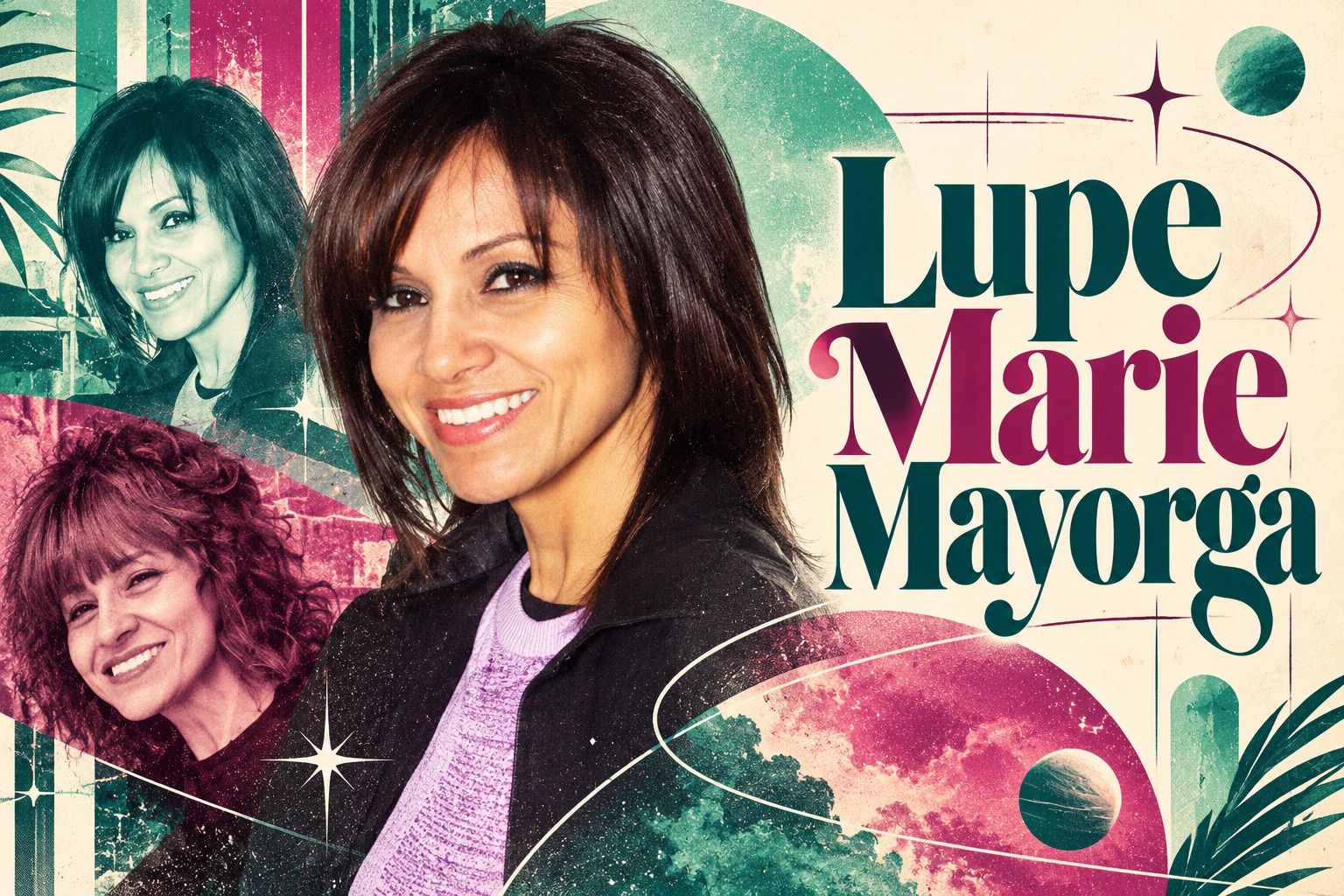
A Mother With Her Own Voice
I find Lupe Marie Mayorga’s biography most compelling where music, motherhood, and belief meet. She is the Honduran born mother of singer David Archuleta, but her own public story includes singing, dance, children’s arts education, and a later reassessment of a faith she had practiced for decades.
She also appears publicly as Lupe Bartholomew. The names identify the same woman discussed in David’s family history and in her own interviews. The change of surname alone does not establish additional marriage details.
Lupe worked as a salsa singer and dancer, bringing performance into her household long before David became nationally known. Her influence was therefore practical: music and movement were activities she could share with children, rather than a distant celebrity occupation they encountered only through a screen.
Honduras and the Earlier Faith Story
Lupe was born in Honduras. She and members of her family joined the Church of Jesus Christ of Latter day Saints there before the later move to the United States. Her mother and sisters appear in her account of that religious beginning.
The faith became an enduring part of her family life. It shaped the environment in which she raised her children and the expectations around belonging. I see that long history as important to understanding why a later change involved more than a quick reaction to one headline.
Her Honduran origins also supply a clear cultural setting for the musical background described in David’s early biographies. Salsa singing and dance were part of the family’s creative life. That does not mean every song David recorded can be assigned to one cultural influence, but it establishes an identifiable part of his upbringing.
I keep the early chronology broad where exact dates are not established. The meaningful sequence is Honduras, religious involvement, migration, and family life in the United States.
Jeff and a Musical Household
David’s father is Jeff Archuleta, described as a jazz musician. With Lupe’s salsa singing and dance, the household contained different musical interests. The children grew up with performance available as an activity rather than simply an ambition.
David James Archuleta was born on December 28, 1990. He grew up with siblings, and family accounts describe children singing or dancing at community events. Lupe taught music and movement to them while developing her own connection with children’s performing arts.
Jeff is not established as Lupe’s father merely because a family list places his name next to David’s. His relationship in this account is David’s father. The distinction is essential to a coherent family portrait.
The siblings have generally had smaller public profiles than David. Their participation in the household and childhood performances belongs in the story without requiring invented occupations or personal relationships for each of them.
American Idol and a Larger Audience
David became the runner up on the seventh season of American Idol in 2008. The television competition introduced his singing to a much larger audience and brought new attention to his family’s musical background.
Lupe’s role in that account was both maternal and musical. She had encouraged performance in the earlier household, and audiences later saw her as the mother of a widely recognized young singer. Her own activities did not become identical to his television achievement.
I find the distinction useful because talent competitions can compress a childhood into a brief explanatory clip. Behind such a clip are years of practice, family activities, and ordinary routines. Lupe’s singing and teaching supply specific pieces of that earlier setting.
David went on to release albums and singles. The later career created another public stage for family stories, including the relationship with his mother that would become central to a 2024 song.
Performing Arts for Children
Lupe became involved with Archuleta Performing Arts, a program teaching children singing and dance. The activity extended skills used within her own household into a community setting.
I see this as one of the clearest professional facts in her biography. A performer can use experience not only to entertain but also to help beginners learn. The children’s program connected her musical background with instruction and participation.
The established account does not require a private income figure or a list of awards to make that work meaningful. Her activity concerned introducing young people to performing arts, a purpose distinct from managing David’s recording career.
Coming Out and Reconsidering Belief
David publicly came out as queer in 2021 and stepped away from the church in 2022. His discussion of those changes included the difficulties of reconciling sexuality with the religious environment in which he had grown up.
Lupe’s response evolved, and she later expressed strong solidarity with him. David described a supportive message from her and said that she also chose to leave the church. I retain that attribution rather than inventing the exact private conversation around it.
In 2023, Lupe told her own story in a lengthy Mormon Stories interview. That appearance gave her a voice separate from the summaries supplied by others. Her account connected the earlier faith history with motherhood and the changes that followed David’s public disclosure.
I think of this chapter as a rearrangement of the family’s foundations. Her religious history remained part of her life, even as she reconsidered what belonging and support required. The established action is her expressed support and public reassessment, rather than an invented claim that every relative made the same decision.
Hell Together and a Public Tribute
David released Hell Together in 2024, connecting the song with his mother’s support. The official music video used home footage, linking the newer message with earlier images of the family.
The project turned a mother and son relationship into a musical subject without making Lupe a fictional character. I find the home footage especially effective as a chronological connection: the public adult conversation sits alongside reminders of childhood.
Her role in the song’s story also completes a circle within this phase of the biography. A mother who brought music into the household later became the person her son’s music honored.
FAQ
Are Lupe Marie Mayorga and Lupe Bartholomew the same person?
Yes. Both names are used publicly for David Archuleta’s mother. Her interviews and family accounts connect the names with her Honduran background, musical work, and later faith story.
What musical work has Lupe done?
She has been described as a salsa singer and dancer and taught music and dance to her children. She also became involved in Archuleta Performing Arts, extending that experience into instruction for young people.
Why is Hell Together connected with Lupe?
David framed the 2024 song as a tribute to her support after his coming out and departure from the church. The video included family footage, joining the current message with their earlier family history.